Field Notes
I Kept Ending Up at the Water
By Audrey Cox · June 2026 · 4 min read
I grew up going to the ocean every summer. Long days on the beach, in and out of the water until someone made me come home. What I remember most is the feeling that the ocean didn't belong to anyone. It didn't check who you were. It was just there, enormous and welcoming, for anybody who walked down to the water.
The more I learned about the ocean, the more its contradictions jumped out at me. Nowhere makes me calmer than the water, and nothing turns turbulent faster. It gives life and it takes life. It means something different to every person who stands in front of it. I have never found the end of that thread, and I've stopped expecting to.
That contradiction is what pulled me toward studying it. I didn't come to the ocean through marine biology. I came through economics, because I loved patterns, and because I loved taking big confusing data and boiling it down to something people could act on. I studied climate risk and coastal economies, served as a NOAA Hollings Scholar with the Office of National Marine Sanctuaries, worked as a research assistant on a climate change project at my university, and published peer-reviewed work on crisis communication and natural disasters.
And somewhere in the middle of it, I noticed the problem. Not with the research, with the reach. The work was solid, but the language was closed. It was a private conversation about a public place, written for academics and policymakers. And most of the people whose lives depend on the ocean had no access to any of it.
I learned to dive just after COVID, in Monterey, near where I grew up. I'd wanted it for years and saved up for it. The conditions were terrible. I was freezing and I could barely see anything. And I was completely obsessed, because I was breathing underwater, floating, weightless, and I felt more like myself than I ever had.
I finished school early and went backpacking. Twenty-some countries, and I kept ending up at the water. Every time. I worked as a research assistant in Madagascar. I became a dive instructor in South Africa. And everywhere I went underwater, my camera came with me, because I kept finding stories and images I could carry back up to the surface for people who would never see them otherwise.
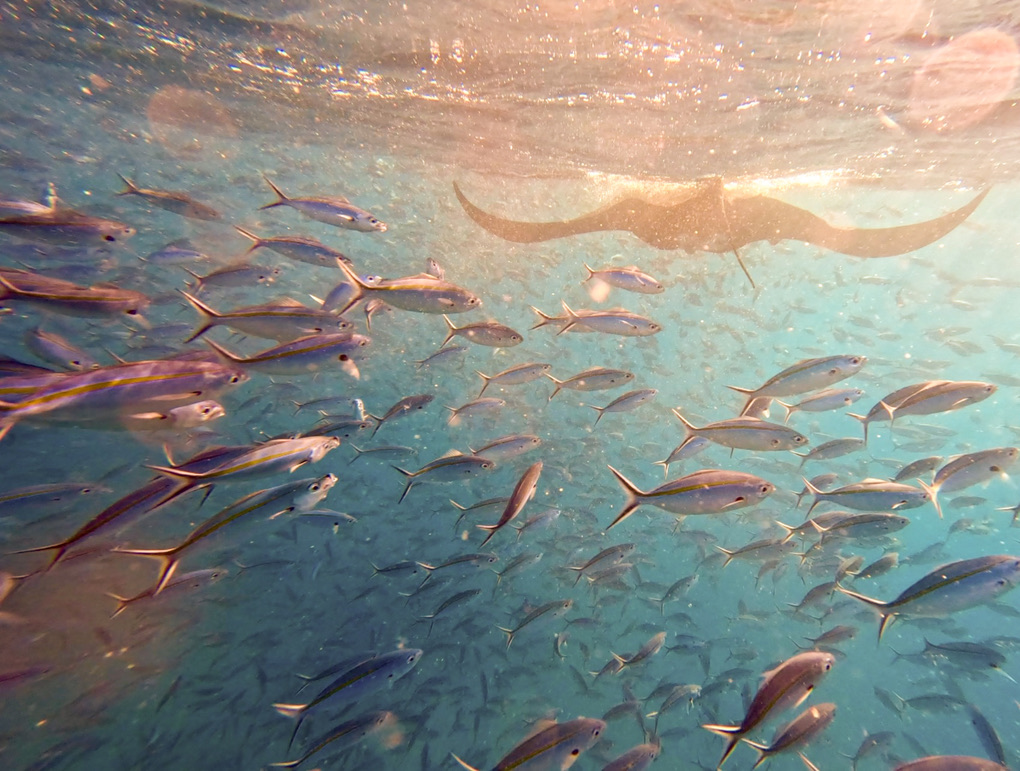
That's when I noticed the shift. My journal articles weren't what caught people's attention. My photographs were. Specifically, my underwater photographs.
That's what the ocean taught me about people. Data matters. It builds the case, it sets the direction, it holds people accountable. But data alone doesn't transform. What transforms people is feeling something. A photograph that stops them. A story that stays with them. A moment in the water they can't explain to anyone who wasn't there.
Both matter. I spent years making the case for the ocean in the language of policy. Now I make it in a language everyone can understand and feel.
Icosa Expeditions is where that landed. We bring people into the water, guide them through a world most people never touch, and send them home changed. Because the ocean doesn't belong to anyone. It's there for everyone. Some people just haven't met it yet.